

Quantum-classical Hybrid Computing Scheme
Using photon chips and quantum computing to drive the revolution in computing power
Industry Background
The quantum industry is a core sector of the future industry that reconstructs computing power, security and measurement accuracy based on the principles of quantum mechanics (superposition and entanglement). Currently, it is in a critical window period of transitioning from laboratory verification to engineering commercialization. China has taken the lead globally in the field of communication, ranked first in the field of computing, and achieved multiple breakthroughs in the field of measurement.
Industry Pain Points
Noise and decoherence: Quantum bits are extremely fragile. Even a slight thermal disturbance or electromagnetic interference can cause the state to collapse, and the coherence time is mostly at the microsecond level, making it difficult to maintain long-term computing.
Error correction challenges: General error correction codes do not match the actual hardware noise, and the phenomenon of "error correction is worse than no error correction" occurs frequently; the construction of logical bits requires a large amount of redundant physical bits, and fault-tolerant general computing has not yet been achieved.
Calibration and initialization: The parameters of multi-bit systems drift rapidly. Traditional manual calibration takes several days and requires frequent resets; cooling technologies such as dilution refrigeration have high energy consumption and slow speed, limiting the expansion of bits.
Hardware route divergence: The superconducting, optical quantum, and ion trap routes each have shortcomings in scalability, interconnection efficiency, and error correction costs, and lack a unified standard.

Scheme Architecture
Hardware physical architecture: From one-dimensional chain to two-dimensional plane
Traditional ion trap quantum computers mostly adopt one-dimensional chain structures, which are connected at junctions to form a grid, with limited scalability. The new generation of architectures is shifting towards a native two-dimensional design to break through the bottleneck of bit quantity.
Two-dimensional ion trap architecture: As proposed by ZuriQ, a spin-off company of ETH Zurich, this design utilizes Penning micro-traps and static magnetic fields to allow ions to freely move on the chip surface. This architecture upgrades the arrangement of quantum bits from "lines" to "planes", enabling the integration of thousands of ion trap quantum bits, significantly enhancing the flexibility of interconnection and the upper limit of computing power.
Multi-physical platform integration: Future architectures tend to deeply integrate multiple physical mechanisms such as superconductivity, optical quantum computing, and ion traps, constructing heterogeneous topological structures, and leveraging the complementary characteristics of different platforms to suppress specific noise channels.
2. System-level architecture: Quantum Centralized Supercomputing (QCSC)
To leverage the quantum advantages before the advent of fully fault-tolerant quantum computers, the "hybrid computing architecture" has become the mainstream approach, especially the reference architecture proposed by IBM, "Quantum Centralized Supercomputing".

Core Advantage

Chipification
Chipification

Modularization
Modularization

Standardization
Standardization

Continuous iteration
Continuous iteration
Core Product
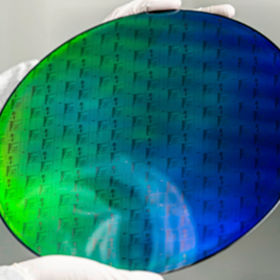
Optical quantum chip
Optical quantum chip
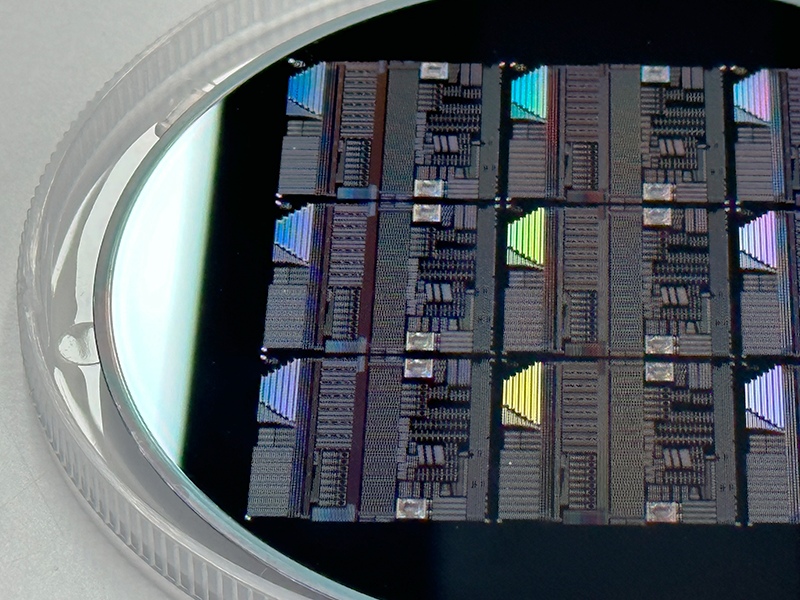
Supercomputing Platform
Supercomputing Platform
Application Scenarios
Supercomputing Center

Supercomputing Center
Supercomputing Center
Application Case
Quantum Application Demonstration Substation
Commissioning Date: Officially put into operation in November 2024, it is the first quantum application demonstration substation in China.
Application Achievements: 18 types and 85 sets of independently developed electric power quantum technology achievements have been put into use, covering three major directions: quantum measurement, quantum communication, and quantum computing. It can reduce electricity error by over 500,000 kilowatt-hours annually.
Core Equipment: Includes quantum current transformers, quantum multi-parameter sensors, quantum laser radars, etc., addressing pain points such as magnetic saturation of traditional transformers and insufficient accuracy for small currents.
Computing Power Breakthrough: The grid power flow calculation method based on quantum computing has been verified through real-grid topology network structure calculation on the domestically produced quantum computer "Benyuan Wukong".