

Thin-film lithium niobate (LNOI) photonic chip technology

Launch a new era for the photonic chip industry

Lithium niobate is a multifunctional crystal material with excellent overall performance, featuring a wide transparency window, moderate refractive index, high linear electro-optic coefficient, and good temperature stability. With the industrialization of lithium niobate thin-film wafers in 2014, this optically superior material, when thinned, has provided an entirely new platform for integrated optics—LNOI. Building upon the inherent properties of conventional lithium niobate crystals, LNOI further achieves enhanced light confinement, higher modulation efficiency, and greater integration density.

core advantage

scale production

CMOS process compatible, enabling mass production

The entire chain capability

Having the complete R&D capabilities from design to production of photonic chips, with rapid iteration.

technical maturity

Having a complete production chain for CMOS process equipment and mature core chip technology

autonomous and controllable

Relying on the country's first pilot line for photonic chips, the entire process is fully controllable, avoiding the problem of being at a technological dead end.

technic index

Chip architecture layer count > 10, half-wave voltage < 2V*cm, extinction ratio > 30dB

Waveguide transmission loss < 0.1dB/cm, electro-optic modulation bandwidth > 100GHz, quantum light source channel count > 128

Linearity > 100dB*Hz(2/3), waveguide quality factor (Q value) > 500,000, programmable linear photon matrix size 160 x 160

Representative achievements
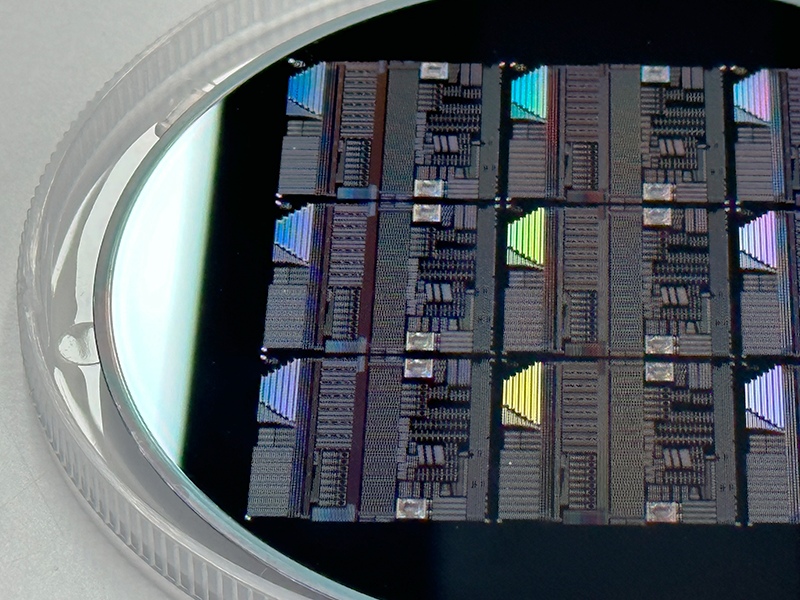
Optical-electronic core integration packaging, as a new type of optoelectronic integration technology, integrates optical chips and point chips together. This not only reduces size and improves computing efficiency, but also lowers power consumption. Currently, the emergence and explosion of phenomenon-level applications of large-scale model training have accelerated the progress of the AI industry. The rapid development of AI has increased the demand for higher computing power, as well as significantly increased energy consumption and costs. The optical-electronic core integration packaging technology provides a new solution to meet the low power consumption, low cost, and high energy efficiency requirements of the AI industry. In recent years, Turing Quantum has been committed to breaking through the core technical problems of optical-electronic core packaging. By combining the core technology of lithium niobate thin film photonic chips, it has currently developed multiple integrated packaging forms and technical solutions.
Representative achievements